The Ed-thropocene

Is this a moment of irrevocable change or have we just gone back to normal?

Editors Note: Three days after publishing this blog, the NYT posted an article about the scientific community rejecting, at least for now, the idea of the Anthropocene. Read it here.

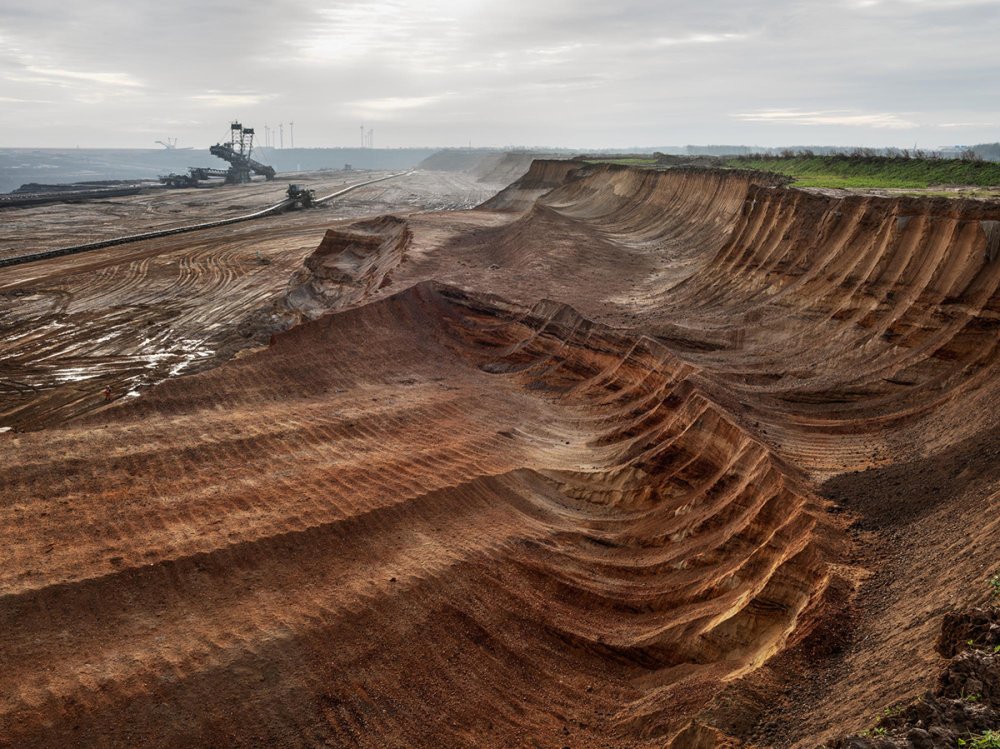
The Anthropocene is a term used which proposes that the earth has entered a new epoch of geologic time (Burtynsky, 2018). The planet, it is proposed, is on a new trajectory due to the ever-increasing impact of man on the natural habitat and has become more unstable as a result (Waters & Zalasiewicz, 2018). For those of you keeping score at home, our current epoch of geologic time is called the Holocene which began approximately 11,700 years ago. According to Wikipedia, the Anthropocene has not yet been given official status as a unit on the Geologic Time Scale (GTS) and is still being debated by international bodies. Anthropocites (my term) argue that the Holocene epoch was stable until about the mid-20th century when man’s effects on the planet became increasingly evident and the natural environs of the planet became unstable. It is argued that physical changes due to deforestation, mining, transportation systems, and the construction of almost 60,000 large dams around the world have permanently altered the natural landscape (McManus, 2018). Other evidence in support of the Anthropocene is measured changes in the chemical makeup of the natural world such as increases in plutonium and radiocarbon radioisotope and decreases in stable carbon and nitrogen isotope ratios (Waters & Zalasiewicz, 2018). The explosive growth of hydrocarbon output and nitrogen fertilizer use also adds to the increasingly unstable chemistry of the earth. Due to human impact, these elemental changes have unbalanced the natural spheres – hydro-, bio-, litho-, and atmosphere(s) – and produced a new system of the earth called the technosphere (Burtynsky, 2018). The disturbances seen and felt in our meteorological systems – the climate – are part of the technosphere and further evidence that the systems of the world as we have known it, have become “irrevocably altered” (McManus, 2018, p. 45). The impact on the interdependence of systems from all of this change is only now becoming understood. 

Does the Anthropocene have implications beyond the world of science?  The interconnected-ness of the systems of the human and social world are sometimes compared to those of the natural world. The beginning of the new Anthropocene epoch coincides with what some have called the great awakening (McManus, 2018).  This term is used to describe the time of increased population growth, consumption of energy, and water usage which matched the social and cultural changes which began in the post-war period of the 1950’s and 60’s. The uncertainty from these socio-cultural changes have continued on many fronts carrying over into the beginning of the new century before facing a new kind of challenge in 2020. The COVID-19 pandemic and its aftermath. 

The recent period of upheaval and uncertainty in the education system due to the COVID-19 pandemic and post-pandemic begs the question: is this recent period an Anthropocene-like event for education? The Ed-thopocene? While the instability at the height of the storm certainly presented as if the world would never return to a pre-pandemic sense of normal, others will argue that the new normal looks pretty much the same as the old one. It is recognized by all that uncertainty has always existed in education, but that levels of such uncertainty have changed in this recent period. What would be evidence of the educational world being irrevocably different? For starters, the New York Times editorial board has argued that the evidence for disabling learning loss from the pandemic is in, and it shows in the United States at least that the reading and math levels have been set back to two decades (Editorial Board, 2023).  Changes in student mental health have been widely documented as being impacted by the pandemic and into the post-pandemic period.  Recent reports from data sources in Ontario (CBC, 2023) suggest that almost 60% of students in that province report that the pandemic have them feeling depressed when they think about the future, and almost 40% identify that their own mental health is worse than previous, and reports of self-harm by students increased by 30% in the first year of the pandemic. The staffing crunch that hit education systems worldwide remains an issue, especially in rural communities (Sutherland et al., 2023). Uncertainty about the future persists as fear and anxiety about the effects of climate change (Carlsten et al., 2023) are renewed with each “unprecedented” weather system or “extreme” fire season.

Thinking about future uncertainty, a UNESCO report in 2021 reported four emerging disruptions as: unpredictable changes in the environment; accelerating changes in technology; increasing fragmentation of existing governance and social frameworks; and the new worlds of work (UNESCO, 2021). Based on these and other factors, does this current moment constitute an Ed-thropcene? Or have we all just overreacted to what one retired Superintendent has called the transitory uncertainty of the pandemic? Has the world of education irrevocably and permanently changed and, if true, what we should do about it? Do we stay the course or radically change what we are doing? Our ability to predict the future is limited, but there are things we can do to prepare for the uncertainty of the future which is sure to come. My next blog will deal with what is going on in the world of scenario planning and how education and other fields might use this approach to prepare for coming Ed-thropocene’s, real or imagined. Stay tuned.

References

Burtynsky, E. (2018). Life in the Anthropocene. In The Anthropocene Project | Book (pp. 189–196). Art Gallery of Ontario. https://theanthropocene.org/book/

Carlsten, C., Brauer, M., Camp, P. G., Nesbitt, L., & Turner, J. (2023). British Columbia, Canada, as a bellwether for climate-driven respiratory and allergic disorders. Journal of Allergy and Clinical Immunology, 152(5), 1087–1089. https://doi.org/10.1016/j.jaci.2023.09.018

CBC. (2023, September 12). Students struggling in wake of pandemic, more mental health resources needed: Toronto board of health | CBC News. CBC. https://www.cbc.ca/news/canada/toronto/toronto-board-of-health-mental-health-children-teens-pandemic-1.6963514

McManus, K. (2018). Life in the Anthropocene. In The Anthropocene Project | Book (pp. 45–58). Art Gallery of Ontario. https://theanthropocene.org/book/

Sutherland, D. H., McHenry-Sorber, E., & Willingham, J. N. (2023). Leading Rural Districts: Research Synthesis of Rural Educational Leaders. Peabody Journal of Education, 98(4), 414–429. https://doi.org/10.1080/0161956X.2023.2238519

The Editorial Board. (2023, November 18). Opinion | The Startling Evidence on Learning Loss Is In. The New York Times. https://www.nytimes.com/2023/11/18/opinion/pandemic-school-learning-loss.html

UNESCO. (2021). Reimagining our futures together: A new social contract for education. UNESCO. https://doi.org/10.54675/ASRB4722

Waters, C., & Zalasiewicz, J. (2018). Life in the Anthropocene. In The Anthropocene Project | Book (pp. 35–44). Art Gallery of Ontario. https://theanthropocene.org/book/
The Space Between

December 2023

This month’s post is from an activity I completed in a course I took this past fall through the University of Manitoba. I share this to express how my train of thought is moving toward the ongoing (and seemingly endless!) development of my research proposal. I also share this in case any of you are interested in pursuing doctoral research further and may want to complete this exercise yourself!

***************************************************************************************************************

Activity 2: This activity is self-directed, and based off of an activity developed by Dr. Kakali Bhattacharya. 

You will need a piece of paper, and things to write with – pens, pencils, markers. We will be doing some contemplative reflection to synthesize what we have been thinking about and through regarding ontologies, epistemologies, paradigms, and methodologies. 

  1. First, draw (in any way you choose) an interpretation of your values, beliefs and assumptions, and a potential research interest. 
  2. After you have finished drawing this piece, draw a bridge ( or any other form of connection) from your values, beliefs, and assumptions to your research interest. Are there any words that can crystallize the connection between the different parts of your drawing?
  3. Next, reflect either through adding to the drawing or writing in your journal, on the following prompts:
    1. If money, skills, knowledge, time, funding, and so on were not an issue, what is it would you want to know? What part of human behaviour, or human experience would you explore?
    2. Why does this topic interest you? Why does it matter?
    3. Are you someone who likes linear, structured thinking? Are you drawn to messy, ambiguous, contradictory thoughts? Both?
  4. Look back at the methodologies we have read about this week. Identify 2 or 3 that are interesting to you. How do these align with your research interest? 

My Response:

1. Values, Beliefs, Assumptions

I am not sure what to draw so will express my initial thoughts in words and then add some visuals later. My values, as they relate to research at least, are to seek integrity, authenticity, and generosity in identifying an issue and telling the underlying narrative about this issue. I understand that people are social beings and that much of the story that is underneath and issue is about interactions with others and the influence that those connections have on action and response. My chosen topic is uncertainty which apart from more academic descriptions, is a general characterization of puzzling situation(s) faced by all people, whether leaders or followers. My specific interest is in how leaders respond to uncertainty. How they interact with others and the impact of local situation are the means of moving from uncertainty to response I wish to know more about.

I imagine my research problem as two cliffs with a space in between.  One cliff is called Uncertainty and requires asking the question, “what is going on here?” to understand what the source or nature of the certainty is. The second cliff is called Response and describes how uncertainty is responded to. The question that could be associated with this is “what to do?” Both of these first two questions can be identified by deductive analysis according to a current model.

What lies in the space between these two cliffs is more complex and is what I want to find out about. What are the influences on how the response to uncertainty is produced? The question that could be asked here is, “what influences the process to go from uncertainty to response?”

2. Drawings

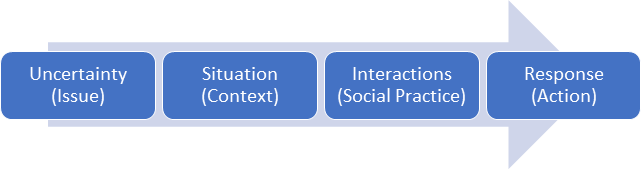
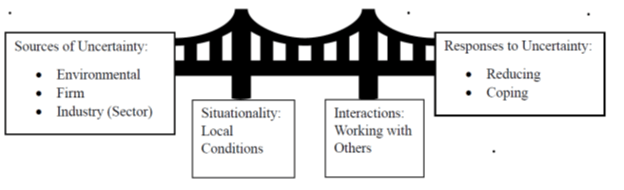
As my drawings tend to be unrecognizable, I used the tools on Word to create the following images. To explain the process of going from uncertainty to response further a flow chart, a bridge, and a narrative description are presented.

The Bridge: A Flow Chart

The Bridge: A Drawing

My “drawing” is not really a drawing but my digitized sketch of what the space between could be composed of.

The Bridge: A Narrative Description

3. Reflection

  • The flow chart above expresses my thinking on the human behaviour required to go from uncertainty to response. 
  • Identifying the issue which is causing uncertainty is a necessary first step.  What is going on here? What is the source of this uncertainty?  Is it external to the organization and from the surrounding environment? Is it common to other organizations across the sector (industry)?  Or, is it from within the firm itself?  The central question is ‘what is going on here?’
  • Next is understanding the local situation or conditions on the ground.  What are the boundaries around the issue from a local perspective?  Is it an issue which can be solved locally?  What local conditions make it difficult to resolve?  What local conditions can help with its resolution?
  • What are the interactions with others which will need to be considered to respond to the uncertain issue.  Is this a matter for the closely trusted team or for the broader community to be involved in?  Should it be discussed only by those internal to the organization or should we go outside to find the response?  What process should we follow to conduct the interactions? How will these help find a resolution or will they just get in the way?
  • Determining what action to take to either cope with or reduce the level of uncertainty? ‘What to do’ is the central question at this stage. This topic matters to me because from my personal experience and according to John Dewey, uncertainty must be resolved whether from “fair means or foul.” Failing to adequately resolve uncertainty has serious consequences for the organization and for the leader(s) of the firm.
  • I like to understand the scope of an issue and the flow of how it will be resolved.  Leaving something unresolved is harmful and should be avoided unless all agree that the matter should not be resolved. I can’t stand leaving things alone.

4. Methodologies

I have already chosen qualitative case study as the methodology I will use to understand the organizational narrative and will use Stake’s (2006) book on Multiple Case Study Analysis to guide the study. I see elements of narrative analysis and phenomenology in this as well.  Narrative in that I will be telling the story of the individual, rural superintendent as well as that of the entire sector. Phenomenology in that uncertainty provides the research target or “essence” of a situation or issue as (Merriam & Tisdell, 2015) identify it. Case study often contains elements of other research designs according to M & T and it is not surprising that this research will draw from a variety of traditions in providing a complete description of the case.

A final note:

I would like to thank Dr. Fowler and the entire Fall 2023 EDUA 7840 class for the warm welcome and open acceptance of my participation in this class.  My doctoral journey has taken me from Shanghai, China to Edmonton, AB and then back to BC (so far). This odyssey now includes Manitoba as another stage of the journey. I was born in Manitoba many (many!) years ago and it was my privilege to be a part of the University of Manitoba even for a short while. Best wishes to our class and the U of M! 

谢谢 (Thank you in Mandarin) and Kukwstsétsemc (Thank you in Secwepemctsín)!

Time to Get Back in the Pool

November 2023

Readers will notice that I haven’t written for a while. I don’t have any excuses really.  Writing is an important activity for aspiring academics and there really is no good reason why I haven’t written anything here for seven months (seven!). There are explanations though. In April I began teaching in the summer term.  As I do, I accepted way too much teaching and for the first three weeks of the initial summer term, I was teaching four sections (four!). I enjoy teaching (I really do) but this was way too much. This pace was reduced somewhat in the second term of the summer semester, but I still had three sections to teach in the first three weeks with one continuing until the end of July. I will not take on that much teaching again (you can confront me with this statement someday). In May, I participated in my oral candidacy exam to attempt to become a PhD candidate. This exam is supposed to be the culmination of classwork and research proposal development and the beginning of the candidacy phase of the PhD process.  This is the normative procedure. Only that my research proposal was not accepted.  As my sponsor once said to me, “you don’t want to fail the oral exam” but this is now exactly what happened. “Where now?” was the question and I had to wonder if the last three years had been time wasted. I definitely had some re-thinking to do.

The first step I took in the re-thinking was to attend the Canadian Society for the Study of Education (CSSE) conference in Toronto. When I applied in the fall of 2022, I was hoping to present some early findings from my research. Only I didn’t have any research to present. I didn’t feel like going and being a “pretender.” My supervisor and others encouraged me to go however so away I went. After my first presentation, one of the attenders said, “Hey, you should go and hear Dr. Mandzuk from the University of Manitoba. His research seems similar to what you are doing.” When I went, I was amazed at what I saw and heard. Dr. M’s research on Deans of Education during the pandemic and other crises was almost exactly the same as mine!  A Stakian collective case study of the leadership experiences of Deans of Ed. He even used the same conception of complexity theory by UB that I was planning to use of leadership being explained as the entanglement of the administrative, emergent, and adaptive functions of leadership. This made a me a little angry at first since I felt that my application of complexity leadership theory had not been well received. With a little more reflection, this reinforced for me that my thinking wasn’t totally in left field. I later had a brief discussion with Dr. M. at the conference and exchanged emails with him on how I was planning to re-think my research. As well as his recent research article presented at the CSSE, he was also kind enough to send me his book, Navigating Uncertainty,

Dr. M’s book argues that leaders require “specific guidance to explore, understand, make sense of, and respond to uncertainty and the complex problems and crises that arise from it” (Hasinoff & Mandzuk, 2018, p. VIII). The book goes on to present a 5-step sensemaking process for resolving uncertainty called the Certainty Matrix. The treatment of uncertainty as a serious academic concept in this book, along with a systematic framework for developing a response builds a foundation for re-thinking my approach to the topic.

From this, I have determined that what I want to learn about are responses to the phenomenon of uncertainty which is faced by all leaders but which in recent years it has been increased to a new level.  Radical uncertainty is a term used by Romeijn and Roy (2014) to describe “the state of utter cluelessness” (p. 1224) felt subjectively by leaders when responding to uncertainty from multiple disruptive events.  These authors further define that radical uncertainty arises when there is doubt about assumptions, but no means present to identify alternate assumptions around a new set of ideas to reach a clear conclusion (Romeijn & Roy, 2014). Tourish (2020) defines radical uncertainty as arising from “ambiguous events [which] lack obvious precedents, clear solutions and straightforward criteria for evaluation” (p. 265). In my last entry, we discussed how Kay and King (2021) characterized situations of radical uncertainty as a mystery and not merely a puzzle. Puzzles have specific rules and lead to specific, well-defined solutions which can be solved even if difficult. By contrast, mysteries are vague and indeterminate, have no verifiable solution, and often lead to incomplete responses and understandings (Kay & King, 2021). For educational leaders, the pandemic and its aftermath were not a puzzle with a single solution, but a mystery which required adaptions beyond linear descriptions when determining responses (Tourish, 2020). Throw in further disruptions such as staff shortages, public controversy, or inconsistent attendance patterns and clear solutions are difficult to determine.  More guidance is needed which explore how leaders can cope with radical uncertainty where “the margin of error is high and consequences of failure potentially catastrophic” (Tourish, 2020, p. 265). The objectives of the study will be to explore the sources and management responses to uncertainty with additional questions about the influence and role of local setting (context) and interactions with others will be asked to gain insight into the primary purpose of how responses to uncertainty were determined.

The hardest part of all this is sitting down to write again. In my research methodology class we were asked to identify what the biggest challenge is in our writing. I used an analogy from my brief time as a swimmer. Getting in a cold pool early in the morning requires an extra dose of courage. Swimming laps is a grind. But there is little like the feeling of exhilaration and accomplishment when getting out of the pool. To get this state of exhilaration with my writing, I need to take a breath, get in the pool, and start grinding out the laps. Stay tuned.

Puzzles and Mysteries: What is Going on Here?

Most people find the concept of radical uncertainty natural and indeed obvious. For them, the challenge is not to accept the existence of radical uncertainty but to find ways of coping with it. (Kay & King, 2021, p. xv)

Clearwater Lake, Wells Gray Provincial Park

Radical uncertainty is defined by Kay and King (2021) as the combination of “imperfect knowledge of future states of the world and of the consequences of action” (p. 160).  The authors describe these situations of such radical uncertainty as either a puzzle or a mystery. Puzzles have specific rules and lead to single, well-defined solutions although, like a puzzle, reaching these solutions might still be difficult to accomplish. Mysteries on the other hand are vague, poorly understood and have no verifiable solution. For all leaders, the COVID-19 pandemic was more of a mystery rather than a puzzle which required changes in leadership practice beyond what may have been identified prior to the pandemic (Tourish, 2020).

Scholars of leadership have an opportunity through the context of the pandemic to thoroughly examine and better understand how leaders have addressed such radical uncertainty in these circumstances (Kay & King, 2021; Romeijn & Roy, 2014). The pandemic has presented new opportunities for improved leadership practices some of which will endure into the post-pandemic period and change the way that leadership is done. In education, one of these opportunities included new ways to communicate with and involve students and stakeholder communities in leadership (Anderson et al., 2022). Other practices in educational organizations involved inventing new structures to solve radical uncertainty which involved a greater number of people with a broader range of expertise (Smith, 2012). A central challenge for the theory and practice of leadership in the post-pandemic period is to identify what practical ways of communicating and finding solutions emerged which can help leaders better cope with events of radical uncertainty where “the margin of error is high and consequences of failure potentially catastrophic” (Tourish, 2020, p. 265). While the literature on crisis management is well developed, specific preparation for educational leaders has not kept up with the current circumstances, and more models are needed which provide direction for leaders in developing action and response to increasingly complex situations of uncertainty (Beven, 2016; Eiser et al., 2012; Sword-Daniels et al., 2018).

Leaders need a more complete understanding of the theoretical and practical components of how to address uncertainty in the future. In education, is it possible to change the perspective on uncertain events toward making not only surviving the crisis but making the system more resilient and more successful (Tamtik & Darazsi, 2022)? When people are confronted by situations where there is no established method for determining what action to take, the natural response is to claim that ‘we don’t know what to do’ which in the reality of life is not an available option. Kay and King say that when confronted by a mystery, leaders must first seek understanding about ‘what is going on here?’ (Kay & King, 2021) and identify the sources and causes of uncertainty. My studies seek to understand better the mystery of “what is going on here?” so that leaders can then focus on the question, “what to do?”. While leaders can never have a perfect knowledge of outcomes, we can at least have a better idea of what just happened here so that we are better prepared when uncertainty appears, in whatever form. 

References

Anderson, D. J., MacCormack, J., & Sider, S. (2022). Exploring school principals’ experiences during the first four months of the pandemic as a way to reimagine inclusive education. Canadian Journal of Educational Administration and Policy, 200, 37–48. https://doi.org/10.7202/1092706ar

Beven, K. (2016). Facets of uncertainty: Epistemic uncertainty, non-stationarity, likelihood, hypothesis testing, and communication. Hydrological Sciences Journal, 61(9), 1652–1665. https://doi.org/10.1080/02626667.2015.1031761

Eiser, R. J., Bostrom, A., Burton, I., Johnston, D. M., McClure, J., Paton, D., van der Pligt, J., & White, M. P. (2012). Risk interpretation and action: A conceptual framework for responses to natural hazards. International Journal of Disaster Risk Reduction, 1, 5–16. https://doi.org/10.1016/j.ijdrr.2012.05.002

Kay, J., & King, M. (2021). Radical uncertainty: Decision-making beyond the numbers. W.W. Norton & Company. https://wwnorton.com/books/9781324004783#!

Romeijn, J.-W., & Roy, O. (2014). Radical uncertainty: Beyond probabilistic models of belief. Erkenntnis, 79(6), 1221–1223. https://doi.org/10.1007/s10670-014-9687-9

Smith, C. (Ed.). (2012). Pluralism in the arts in Canada: A change is gonna come. Our Schools/Our Selves Education Foundation ; Canadian Centre for Policy Alternatives.

Sword-Daniels, V., Eriksen, C., Hudson-Doyle, E. E., Alaniz, R., Adler, C., Schenk, T., & Vallance, S. (2018). Embodied uncertainty: Living with complexity and natural hazards. Journal of Risk Research, 21(3), 290–307. https://doi.org/10.1080/13669877.2016.1200659

Tamtik, M., & Darazsi, S. (2022). Navigating turbulent waters: Leading one manitoba school in a time of crisis. Canadian Journal of Educational Administration and Policy, 200, 22–36. https://doi.org/10.7202/1092705ar

Tourish, D. (2020). Introduction to the special issue: Why the coronavirus crisis is also a crisis of leadership. Leadership, 16(3), 261–272. https://doi.org/10.1177/1742715020929242

Tamtik, M., & Darazsi, S. (2022). Navigating turbulent waters: Leading one manitoba school in a time of crisis. Canadian Journal of Educational Administration and Policy, 200, 22–36. https://doi.org/10.7202/1092705ar

Tourish, D. (2020). Introduction to the special issue: Why the coronavirus crisis is also a crisis of leadership. Leadership, 16(3), 261–272. https://doi.org/10.1177/1742715020929242

Sounding Like Yourself

“Man, sometimes it takes a long time to sound like yourself.” – Miles Davis.

(Quote brought to you by Bev & Etienne Wenger of Community of Practice fame https://lnkd.in/gAbSEzqm)

Wells Gray Provincial Park

I posted this quote on Linked In a couple of weeks ago as it expresses what any person seeking to establish their own voice feels as they write, sing, preach, paint or participate in any creative endeavour. Miles Davis had it right, that the goal of any of these pursuits is to sound like yourself as you express your voice.  For me, writing is one of the ways I try to sound like myself and have been pursuing this as a fledgling blogger, in academic writing, or in my personal journal writing. Other forms of writing I have engaged in make it hard to sound like yourself. Writing professional documents and letters, contract and collective agreement language, or newsletters to the school community are hard to establish your own voice in. My most triumphant success in writing so far has been a letter to the National Post when press reports about Prince William’s new girlfriend at the time and now future Queen, Kate, began to surface.  These reports mirrored exactly what had happened to William’s mother, Diana, and eventually resulted in her death in a fiery crash in a Paris tunnel as she was being pursued by a mob of paraparazzi. In my view, this was a path to destruction that society should learn from the past and not repeat.  My letter was chosen to be the letter of the day and I received my 3 minutes of fame (not quite the full 15!) with family and friends for this accomplishment. I think a key reason for this success is that I was expressing my true, inner voice on this topic.

Since this minor triumph, while building a record of my activity as an educator on my blog and getting some good marks on academic papers, I persist in my sometimes amateurish attempts to seek further fame and glory with published writing. For any aspiring scholar seeking to “get published” is a basic expectation, but between writing literature reviews as a graduate research assistant, writing and re-writing drafts of my research proposal, and my work as a sessional instructor haven’t yet had much time to pursue this with any depth.  A minor accomplishment was to co-publish an abstract of a presentation made with my colleague as part of work as research assistant so I have something at least to show for my efforts to date. Sounding like myself, however, remains an elusive target.

One my most memorable experiences with sounding like myself was being asked to conduct an interview as a part of a work-related investigation. I will never forget that the colleague who asked me to do this task said I should ask the questions, “like Glenn Borthistle” would ask the question. In other words, I was being asked to sound like myself when doing this task. What was meant by this of course is that there is a way to ask a question which elicits a non-defensive response from the rather than being accusatory which so often happens in workplace settings. Lawyers are good at choosing their voice carefully when asking questions to get a truthful answer. My task was to make sure the person felt comfortable enough that they would provide a fulsome and complete answer so that the truth would come out.  While there are clearly times to use either of these approaches requiring different voices, this was a case where sounding like myself was the better approach to get the truth out. 

In the year ahead as I finalize my research proposal and begin to write my final dissertation, I will need to sound like myself in my writing and write about uncertainty in a way which sounds like myself. My doctoral supervisor has likened the PhD odyssey to an “inner journey” which sounds an awful lot like trying to sound like myself. Miles Davis expresses well the feelings of exasperation that can occur when it takes a long time to sound like yourself.  No matter what else is tugging at my scattered attention, I need to set aside regular time for writing and most of all, not to be afraid to sound like myself!

Cause and Effect

October 2022

Whether causation “really exists” or not, it certainly exists in our “life world.”. . . The world of ordinary language (the world in which we actually live) is full of causes and effects. It is only when we insist that the world of ordinary language . . . is defective . . . and look for a “true” world . . . that we end up feeling forced to choose between the picture of “a physical universe with a built-in structure” and “a physical universe with a structure imposed by the mind.” H. Putnam (1990). “Realism with a Human Face, p. 89.

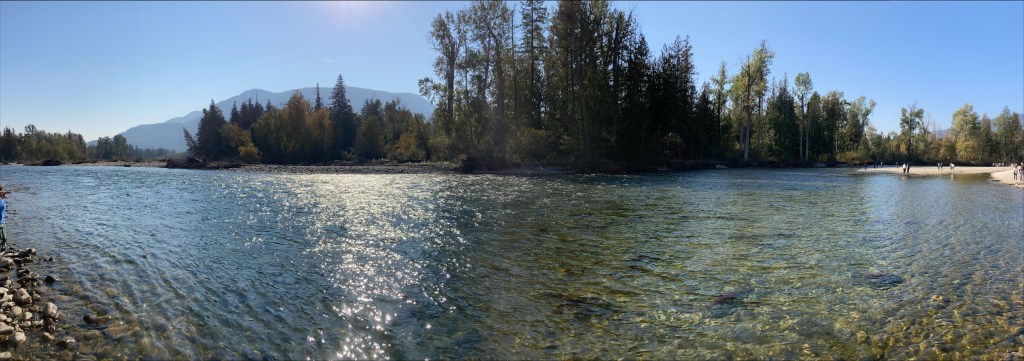
Adams River, British Columbia, Canada

When I was first presented with the topic of causation as part of my work as a research assistant, I was hesitant and uncertain. I hadn’t thought much about causation whether in real life or in education and was unsure about what I would discover about the topic. The first few articles I read focused on calculation and computation which, suffice it to say, did not ‘engage’ me in the topic. As I began to read more however, I began to see that attributing causality is not only a component of human experience, but that it is a central and necessary part of research activity. Humans always want to know the ‘why’ of the reason something has happened and much of the activity of the academic world is intended to uncover causal factors in events. The above quote by Hilary Putnam supports the notion that causation is also part of our ordinary ‘life world’ whether it comes from a physical or mental perspective. Simple connections such as the effect of losing weight due to the cause of increasing exercise or reducing food intake are pretty familiar to us. Another example of causation in daily life is that if I treat others well, they will treat me well in return (this one always works, right?). Think about how many of your daily activities are filled with cause-and-effect connections like these. There must be verifiable ways of making causal inferences or explanations about what factors contribute to the ‘why’ of events? My reading since my initial non-engagement has moved away from the calculation and computation approach to causation, and about finding other ways to understand and make determinations of causality.

In his article, The Importance of Qualitative Research for Causal Explanation in Education , Joseph Maxwell (2012) writes that most causal approaches have been based on scientific, quantitative methods usually through Randomized Controlled Trial (or RCT) methods. These clinical trials are based on random selection of groups and then using statistical analyses to make connections between the effect of one variable on another. Clinical trials like this are based on positivist applications of variance theory that the world can be explained as the action of one variable on another. According to Maxwell, limiting causality to this approach is based on a “narrow, incomplete, and dated conception of causality” (p. 655). While these clinical approaches are certainly valid sources of cause and effect, there are other ways to finding cause. An added approach to causality can be established by qualitative methods which use “‘realist,’ ’generative’, or ‘process’” approaches (p. 656) which account for how the context of actual events contributes to outcomes. This is called “causal realism” (Little, 2010, cited in Maxwell, 2012, p. 657) and is based on the understanding that process is an essential part of causation. Causal realism recognizes the importance of process and includes making our beliefs, values, intentions and perceived meanings a part of the causation equation. It is a worldview which includes constructivist understandings which are limited, incomplete and not always objective. I don’t know about you, but this sounds like the world I live in!

Traditional approaches from clinical trials are important but often neglect other factors which can impact why things happen the way they do. Cause and effect are a reality in our world and needs to be included in how we build our understandings and conclusions about how the world works.. Humans will always want to know ‘why’ something has happened and a little bit of knowledge of the field of causality is important not only to researchers but to us regular folks.  Consider me now ‘engaged’ by this topic!

Source: Maxwell, J. A. (2012). The Importance of Qualitative Research for Causal Explanation in Education. Qualitative Inquiry, 18(8), 655–661. https://doi.org/10.1177/1077800412452856

Judgment

“Intelligence on the other hand is associated with judgment; that is, with selection and arrangement of means to effect consequences and with choice of what we take as our ends.” John Dewey in The Quest for Certainty, 1929, p. 203.

Trapp Lake outside of Kamloops, British Columbia

We can all point to times in our lives when we have made good decisions which produced good consequences. Regrettably, we can also point to times in our lives when we made decisions that did not create the consequences we were seeking.  Dewey suggests that it is this ability to make judgments which result in good outcomes which is the true mark of intelligence rather than determining intelligence by having a firm grasp on elements of knowledge about something. This is why Dewey is one of the fathers of the pragmatist school of philosophy as what you do with what you know is more important than just what you know.

The knock on academia is that it is all about theory and accumulation of knowledge rather than practical application to real world problems.  It is tempting for the PhD student to focus only on intellectual growth and build intelligence around theory alone.  In fact, this is what others expect of you when they hear that you are a grad student at the doctoral level and will say things like “Why do you want to know more about education?” However, if you have experienced the candidacy process where one turns from a student into a PhD candidate, then you will know there is another side to the story. I am at the point where I am working toward that next step in the Doctoral process and have my research critiqued and then approved so that I can go out and collect my data. 

Becoming a PhD candidate is about taking the knowledge of theory that has been gained from classes and individual reading and applying them to a do-able and practical-able research proposal which will add to the knowledge base.  This step requires the approval of a supervisory committee which is charged with maintaining the standards of academia as they provide a critical eye to the aspiring PhD candidate’s work. It is a daunting prospect for sure.  As Dewey talked, about we are only seen to be truly intelligent when we are able to do something with our knowledge and address a real-world problem.

My research is about how Superintendents responded to the uncertainty created during the pandemic.  Where the uncertainty came from, what were the responses to this uncertainty, and what action did the Superintendent take toward influencing these responses.  Understanding more about how these important educational and community leaders acted to determine responses to uncertainty will contribute toward the knowledge base of how leaders of organizations should act in response to uncertainty which will surely arise again (or maybe never leave us!). That is my intent at least.

Dewey goes on to say that if better judgments can be made, it will be worth the trade-off of “a loss of theoretical certitude for a gain in practical judgment” (Dewey, 1929, p. 204).  Is this trade off true in your field of work or life as well? 

First Day of School!

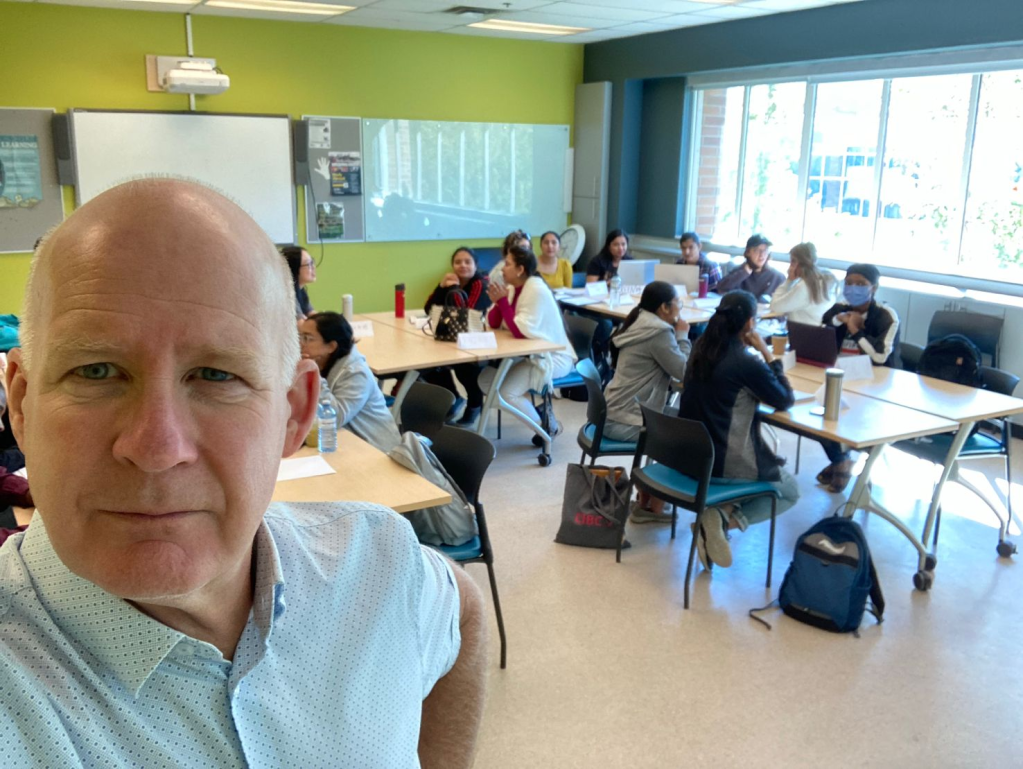
It’s still a thrill after all these years!

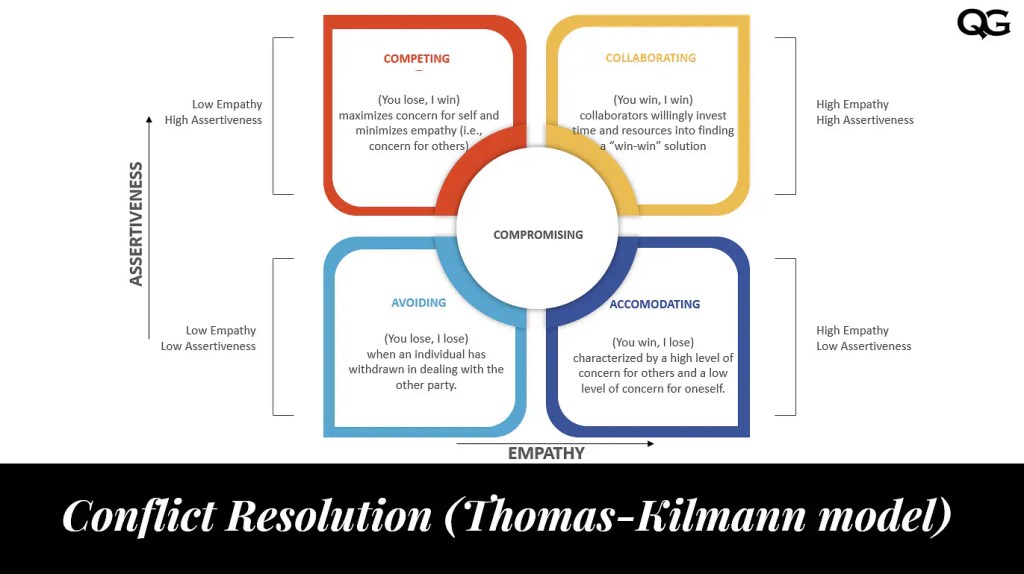
Nothing like being with students on the first day of school! Great to have students interacting about Thomas & Kilmann’s 5 conflict resolution styles. What is your conflict resolution style? #tru

Source: https://www.qualitygurus.com/conflict-resolution-thomas-kilmann-model/

https://www.linkedin.com/posts/glenn-borthistle-035b378_tru-activity-6973008811762597888-b7PJ?utm_source=share&utm_medium=member_desktop

Getting to the Light

Note: This is the script of my 3 Minute Thesis presentation earlier this year. The idea is to condense your thesis into a three minute presentation using only a single slide as a backdrop. This certainly forces the erstwhile scholar to be concise in both words and thought. Wouldn’t it be great if every speech was delivered in three minutes! Hope you enjoy this.

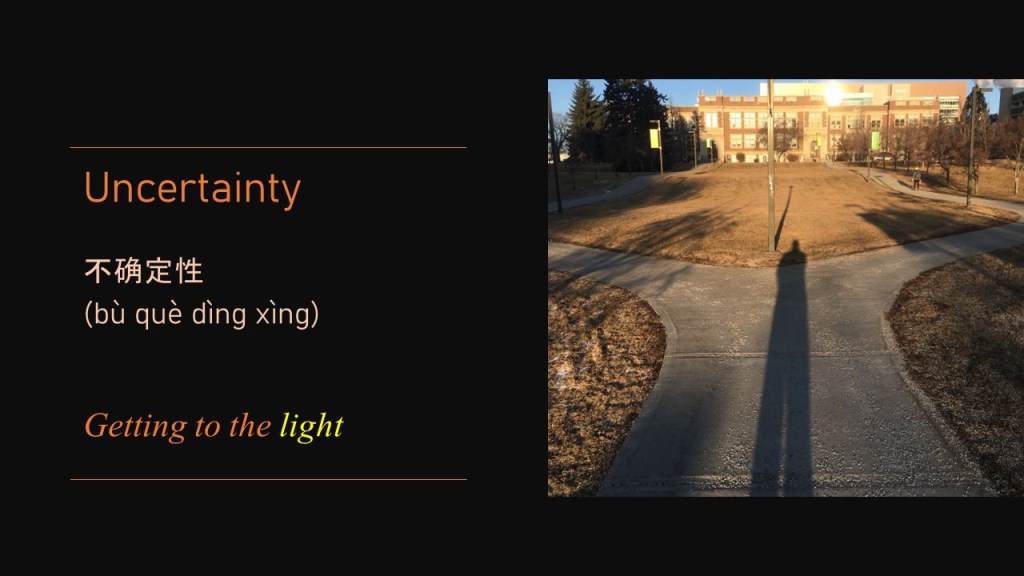
The translation of uncertainty in Mandarin Chinese is 不确定性( bù què dìng xìng) which carries two meanings.  One is being dependent on chance and the other is the “state of being unsure.”  To illustrate this, an ancient Daoist tale tells of an old man whose horse runs away and upon hearing of this loss, the old man’s neighbours respond with sadness and sympathy for the loss of his horse.  The old man responds and simply says, “how  can you be sure this is bad luck?” A few months later, the horse returns and brings other high quality horses with it at which the neighbours are overjoyed to which again the old man responds by asking, “How can you be sure this is good luck?”  

    The uncertainty created by COVID-19 has driven leaders away from traditional, rational decision making practices toward socially based adaptive practices which produce meaning and coherence for themselves and their organizations.  The way the world is changed is characterized by one Superintendent who says, “I don’t think that this is a tunnel we’re going to come through and say, ‘Oh, we’re just back to daylight.’ We’re just going to continue to navigate this.”  How have leaders worked to get back to the light and what decision making practices have they used to make choices in such uncertain times? 

    My study will look at organizations which have taken an adaptive approach to these times.  Sensemaking is one such adaptive process and is a social practice popularized by Karl Weick which involves engagement of people with evidence for the purpose of making the use of such evidence “meaningful and actionable” (Honig, 2008, p. 647).  Sensemaking in organizations calls first for framing of events which occur outside of the expected (like COVID), then interpreting their meaning from a circumstantial or organizational perspective, and finally producing a plausible action plan to create a path forward (Weick & Sutcliffe, 2005).   My research plan is to interview 6 Superintendents of school districts in Alberta and British Columbia to learn about how they and their organizations have adapted and made sense of this uncertain time so that these adaptive responses can be applied to the world which will emerge out of the tunnel of uncertainty.

    To end the story…the presence of the horses leads to prosperity for the old man until one day when the old man’s son falls off a horse and breaks a leg while out riding.  Predictably the neighbours are again distressed & the old man predictably responds “How do you know this is bad luck?”    Soon after the old man’s army is  attacked by bandits and everyone is killed except the old man and his injured son who both were unable to fight.  The interpretation by Daoist philosophy is that one can never be certain when good luck will become bad, or when bad fortune will turn into good.  Like the old man and his horse, this has been a difficult and often tragic time in the world but we must learn how these recent events in our lives, organizations, and social worlds can be used to lead us forward into the light.  

References:

Honig, M. I. (2008). District central offices as learning organizations: How sociocultural and organizational learning theories elaborate district central office administrators’ participation in teaching and learning improvement efforts. American Journal of Education, 114(4), 627–664. https://doi.org/10.1086/589317

Weick, K. E., & Sutcliffe, K. M. (2005). Organizing and the process of sensemaking. Organization Science (Providence, R.I.), 16(4), 409–421. https://doi.org/10.1287/orsc.1050.0133