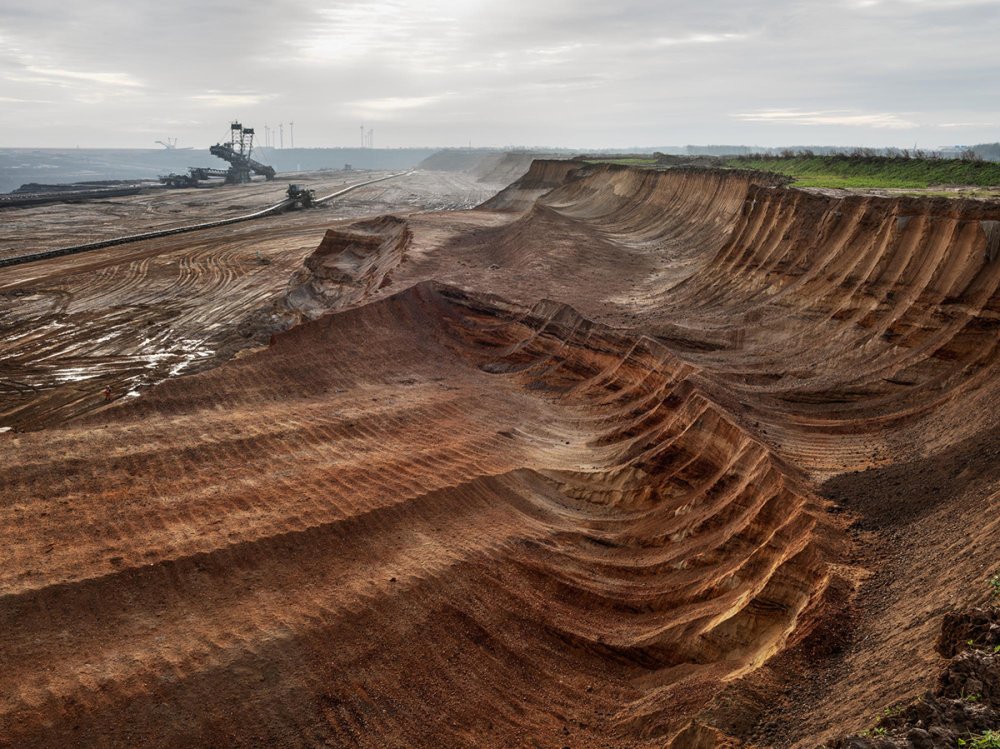
Is this a moment of irrevocable change or have we just gone back to normal?
Editors Note: Three days after publishing this blog, the NYT posted an article about the scientific community rejecting, at least for now, the idea of the Anthropocene. Read it here.
The Anthropocene is a term used which proposes that the earth has entered a new epoch of geologic time (Burtynsky, 2018). The planet, it is proposed, is on a new trajectory due to the ever-increasing impact of man on the natural habitat and has become more unstable as a result (Waters & Zalasiewicz, 2018). For those of you keeping score at home, our current epoch of geologic time is called the Holocene which began approximately 11,700 years ago. According to Wikipedia, the Anthropocene has not yet been given official status as a unit on the Geologic Time Scale (GTS) and is still being debated by international bodies. Anthropocites (my term) argue that the Holocene epoch was stable until about the mid-20th century when man’s effects on the planet became increasingly evident and the natural environs of the planet became unstable. It is argued that physical changes due to deforestation, mining, transportation systems, and the construction of almost 60,000 large dams around the world have permanently altered the natural landscape (McManus, 2018). Other evidence in support of the Anthropocene is measured changes in the chemical makeup of the natural world such as increases in plutonium and radiocarbon radioisotope and decreases in stable carbon and nitrogen isotope ratios (Waters & Zalasiewicz, 2018). The explosive growth of hydrocarbon output and nitrogen fertilizer use also adds to the increasingly unstable chemistry of the earth. Due to human impact, these elemental changes have unbalanced the natural spheres – hydro-, bio-, litho-, and atmosphere(s) – and produced a new system of the earth called the technosphere (Burtynsky, 2018). The disturbances seen and felt in our meteorological systems – the climate – are part of the technosphere and further evidence that the systems of the world as we have known it, have become “irrevocably altered” (McManus, 2018, p. 45). The impact on the interdependence of systems from all of this change is only now becoming understood.
Does the Anthropocene have implications beyond the world of science? The interconnected-ness of the systems of the human and social world are sometimes compared to those of the natural world. The beginning of the new Anthropocene epoch coincides with what some have called the great awakening (McManus, 2018). This term is used to describe the time of increased population growth, consumption of energy, and water usage which matched the social and cultural changes which began in the post-war period of the 1950’s and 60’s. The uncertainty from these socio-cultural changes have continued on many fronts carrying over into the beginning of the new century before facing a new kind of challenge in 2020. The COVID-19 pandemic and its aftermath.
The recent period of upheaval and uncertainty in the education system due to the COVID-19 pandemic and post-pandemic begs the question: is this recent period an Anthropocene-like event for education? The Ed-thopocene? While the instability at the height of the storm certainly presented as if the world would never return to a pre-pandemic sense of normal, others will argue that the new normal looks pretty much the same as the old one. It is recognized by all that uncertainty has always existed in education, but that levels of such uncertainty have changed in this recent period. What would be evidence of the educational world being irrevocably different? For starters, the New York Times editorial board has argued that the evidence for disabling learning loss from the pandemic is in, and it shows in the United States at least that the reading and math levels have been set back to two decades (Editorial Board, 2023). Changes in student mental health have been widely documented as being impacted by the pandemic and into the post-pandemic period. Recent reports from data sources in Ontario (CBC, 2023) suggest that almost 60% of students in that province report that the pandemic have them feeling depressed when they think about the future, and almost 40% identify that their own mental health is worse than previous, and reports of self-harm by students increased by 30% in the first year of the pandemic. The staffing crunch that hit education systems worldwide remains an issue, especially in rural communities (Sutherland et al., 2023). Uncertainty about the future persists as fear and anxiety about the effects of climate change (Carlsten et al., 2023) are renewed with each “unprecedented” weather system or “extreme” fire season.
Thinking about future uncertainty, a UNESCO report in 2021 reported four emerging disruptions as: unpredictable changes in the environment; accelerating changes in technology; increasing fragmentation of existing governance and social frameworks; and the new worlds of work (UNESCO, 2021). Based on these and other factors, does this current moment constitute an Ed-thropcene? Or have we all just overreacted to what one retired Superintendent has called the transitory uncertainty of the pandemic? Has the world of education irrevocably and permanently changed and, if true, what we should do about it? Do we stay the course or radically change what we are doing? Our ability to predict the future is limited, but there are things we can do to prepare for the uncertainty of the future which is sure to come. My next blog will deal with what is going on in the world of scenario planning and how education and other fields might use this approach to prepare for coming Ed-thropocene’s, real or imagined. Stay tuned.
References
Burtynsky, E. (2018). Life in the Anthropocene. In The Anthropocene Project | Book (pp. 189–196). Art Gallery of Ontario. https://theanthropocene.org/book/
Carlsten, C., Brauer, M., Camp, P. G., Nesbitt, L., & Turner, J. (2023). British Columbia, Canada, as a bellwether for climate-driven respiratory and allergic disorders. Journal of Allergy and Clinical Immunology, 152(5), 1087–1089. https://doi.org/10.1016/j.jaci.2023.09.018
CBC. (2023, September 12). Students struggling in wake of pandemic, more mental health resources needed: Toronto board of health | CBC News. CBC. https://www.cbc.ca/news/canada/toronto/toronto-board-of-health-mental-health-children-teens-pandemic-1.6963514
McManus, K. (2018). Life in the Anthropocene. In The Anthropocene Project | Book (pp. 45–58). Art Gallery of Ontario. https://theanthropocene.org/book/
Sutherland, D. H., McHenry-Sorber, E., & Willingham, J. N. (2023). Leading Rural Districts: Research Synthesis of Rural Educational Leaders. Peabody Journal of Education, 98(4), 414–429. https://doi.org/10.1080/0161956X.2023.2238519
The Editorial Board. (2023, November 18). Opinion | The Startling Evidence on Learning Loss Is In. The New York Times. https://www.nytimes.com/2023/11/18/opinion/pandemic-school-learning-loss.html
UNESCO. (2021). Reimagining our futures together: A new social contract for education. UNESCO. https://doi.org/10.54675/ASRB4722
Waters, C., & Zalasiewicz, J. (2018). Life in the Anthropocene. In The Anthropocene Project | Book (pp. 35–44). Art Gallery of Ontario. https://theanthropocene.org/book/
 Learn 4 Forever